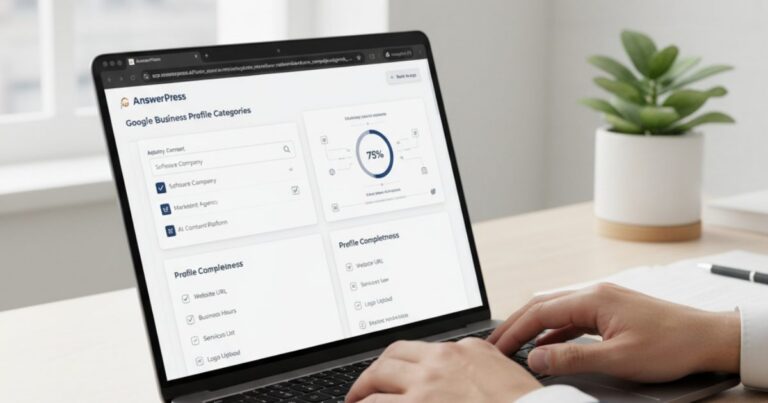

Google Business Profile has always been a local SEO essential. But the rules governing how it affects your visibility have shifted considerably since 2024, and most businesses haven’t caught up. AI Overviews now appear on more than 48 percent of all Google Search queries as of early 2026. That means your GBP is no longer just a listing. It’s a data source that AI systems actively query when deciding which local businesses to cite in generated answers.
If your profile is incomplete, inconsistent, or missing structured signals, you’re not just losing a ranking position. You’re being excluded from the answer entirely.
Key takeaway: Businesses with complete Google Business Profiles are 2.7 times more likely to be considered reputable by consumers, and GBP optimization drives an estimated 32 percent of local ranking factors. In an AI-first search environment, those two facts compound each other significantly.
What Recent GBP Updates Actually Changed
Several concrete changes rolled out between early 2024 and mid-2026 that directly affect how local businesses should manage their profiles. Understanding what was removed is as important as knowing what was added.
Features Google Discontinued
Google deactivated GBP-hosted websites in March 2024. Redirects from those sites continued until June 10, 2024, after which visitors encountered a “page not found” error. Any business that relied on a GBP-generated website as its primary web presence needed to build a standalone site immediately.
The chat feature was removed on July 15, 2024, and both chat and call history were eliminated entirely by July 31, 2024. Businesses that used GBP chat as a customer communication channel had to migrate those conversations to other tools before August 30, 2024, when download access also ended.
What These Removals Signal
Google isn’t simplifying GBP out of convenience. It’s consolidating the profile around the signals that feed its AI systems: structured data, reviews, photos, business attributes, and verified factual information. The features it removed were conversational and transactional. The features it retained and expanded are all about structured, verifiable signals.
For a deeper look at how specific GBP updates are reshaping hyperlocal visibility, see this breakdown of 7 essential GBP updates impacting hyperlocal marketing.
Why AI Overviews Raised the Stakes for Local Profiles
Before AI Overviews, a partially optimized GBP could still earn a spot in the local pack. The ranking algorithm was forgiving enough that a decent review count and a correct address could carry a listing. That tolerance has narrowed.
AI systems cite sources based on structured signals and cross-referenced authority. According to Precision Marketing Partners’ analysis of effective local SEO strategies, 75 percent of local-intent searches result in a store visit within five miles, and local SEO strategies can drive a 125 percent increase in call volume for businesses that execute them well. Those numbers only hold if the business is visible in the first place.
AI Overviews compress that visibility funnel further. If your GBP data is ambiguous or incomplete, the AI has no reliable source to cite, so it cites someone else.
The Structural Signals That Drive GBP Visibility in AI Search
Optimizing for AI-powered local search requires treating your GBP as a structured data feed, not a marketing brochure. The following profile elements carry the most weight for AI citation eligibility.
Business Category and Attributes
Your primary category is one of the strongest signals in the entire profile. Choose it with precision. Secondary categories matter too, but they should reflect actual services, not aspirational ones. Google’s attribute fields, covering accessibility, payment methods, service options, and health and safety details, give AI systems additional structured facts to pull when composing answers.
NAP Consistency Across the Web
Name, address, and phone number consistency across your GBP, your website, and third-party directories is foundational. AI systems cross-reference these sources. A discrepancy between your GBP address and the address on your website introduces ambiguity that AI answers resolve by deprioritizing your listing.
Photos and Visual Completeness
Profiles with active photo libraries outperform sparse ones in local ranking signals. This isn’t about aesthetics. Google’s systems interpret photo uploads as engagement signals that indicate an active, maintained business. Post interior shots, exterior shots, team photos, and product images on a consistent schedule.
Posts and Q&A Content
GBP posts and the Q&A section are underused by most businesses. Both create indexed, structured content directly attached to your profile. Answer your own Q&A questions with clear, factual responses. Write posts that match the conversational phrasing of voice search queries, since 58 percent of consumers used voice search to find local business information in the 12 months preceding a September 2025 survey.
Reputation Management as an AEO Signal
Review signals have always influenced local rankings. Their role in AI-generated answers is more direct than most businesses realize.
AI systems read review content, not just aggregate star ratings. A profile with 200 reviews that mention specific services by name gives the AI structured evidence about what the business actually does. A profile with 200 reviews that say “great place” provides almost no useful signal beyond sentiment.
How to Build Review Content That AI Systems Can Use
- Ask customers to mention the specific service or product they used in their review.
- Respond to every review with a reply that includes your business name and the service referenced.
- Flag and report fake or spam reviews promptly; unresolved spam undermines the profile’s trustworthiness signals.
- Encourage reviews across multiple platforms, not just Google, to build the cross-referenced authority that AI systems reward.
Building this kind of reputation-based authority connects directly to E-E-A-T signals. For a structured approach to E-E-A-T in the context of local SEO, the 7 E-E-A-T strategies for local business SEO article covers the framework in detail.
Structured Data on Your Website Amplifies Your GBP
Your GBP and your website are not independent assets. AI systems treat them as a pair. When the structured data on your website corroborates the information in your GBP, the combined signal is stronger than either source alone.
Only about 12.4 percent of registered domains currently use structured data, according to Schema.org data from April 2025. That low adoption rate represents a real competitive opening for businesses willing to implement it properly.
Schema Types That Matter Most for Local Businesses
- LocalBusiness schema with complete address, phone, hours, and geo coordinates
- Review and AggregateRating schema to surface review data in rich results
- FAQPage schema on pages that answer common customer questions
- Service schema to enumerate specific offerings with descriptions
For WordPress sites using Rank Math, most of these schema types can be configured without writing JSON-LD manually. The integration between Rank Math’s local SEO module and GBP data makes it practical for small teams to maintain schema accuracy as business details change.
Building a Consistent GBP Update Cadence
A GBP that was optimized once in 2023 and left alone is a liability. Google’s systems interpret profile activity as a freshness signal. Businesses that update their profiles regularly, through posts, photo uploads, and attribute revisions, consistently outperform static profiles in local pack and AI Overview visibility.
A Practical Update Schedule
- Weekly: Publish one GBP post addressing a common customer question or seasonal service.
- Monthly: Audit your hours, phone number, and service list for accuracy.
- Quarterly: Review your primary and secondary categories against your actual service mix.
- Ongoing: Respond to every new review within 48 hours and monitor Q&A for unanswered questions.
This cadence doesn’t require a full-time marketing hire. It requires a documented process and someone accountable for executing it. The businesses that treat GBP maintenance as a routine operational task, rather than a one-time setup project, are the ones that maintain visibility as AI search continues to evolve.
Local SEO Strategy in an AI-First Environment
GBP updates are one component of a broader local AEO strategy. The businesses that perform best in AI-generated local answers share a common profile: complete and consistent GBP data, structured data on their website, active review management, and content that matches the conversational phrasing of local queries.
Voice search is a practical example. Queries like “who does HVAC repair near me on weekends” are answered by AI systems that pull structured business data, review content, and GBP attributes. If your profile doesn’t specify weekend hours as an attribute, you’re invisible to that query regardless of your ranking history.
For a comprehensive look at how local businesses can position themselves for AI Overview citations specifically, the article on local SEO strategies for Google AI Overviews covers the full tactical picture.
Conclusion
The GBP updates that rolled out from 2024 onward removed the features that were easiest to use and reinforced the signals that AI systems actually need: structured attributes, verified facts, active review content, and consistent data across the web. That’s a clear signal about where local search is heading.
Businesses that treat GBP optimization as an ongoing discipline, rather than a setup task, are building the structured authority that AI answer engines require. Those that don’t will find their profiles present but uncited.
The practical steps are straightforward: complete every profile field, implement LocalBusiness schema on your website, build a review response habit, and publish GBP posts on a regular schedule. None of these require an agency retainer. They require consistency and a clear process.
If you’re ready to build that process and want a content strategy engine that handles the full workflow from keyword research to publish-ready drafts, explore what AnswerPress can do for your local SEO at answerpress.ai.
Frequently Asked Questions
How have recent Google Business Profile updates changed how AI uses local business data?
Recent Google Business Profile updates have shifted its role from a simple listing to a critical data source for AI systems. AI Overviews now query GBP data to determine which local businesses to cite in generated answers, making profile completeness and structured signals essential for visibility.
What features has Google discontinued from Google Business Profile, and why?
Google discontinued GBP-hosted websites in March 2024 and removed the chat feature by July 2024. These removals signal Google's consolidation of the profile around structured data and verifiable facts that feed its AI systems, rather than conversational or transactional features.
What happens if my Google Business Profile data is inconsistent or incomplete for AI Overviews?
If your GBP data is ambiguous or incomplete, AI systems may not have a reliable source to cite and will likely deprioritize your listing or cite a competitor. This is because AI prioritizes structured signals and cross-referenced authority, and inconsistencies introduce ambiguity.
How often should I update my Google Business Profile to maintain visibility?
To maintain visibility, aim for a consistent update cadence: publish one GBP post weekly, audit your contact information and services monthly, review categories quarterly, and respond to every new review within 48 hours. Regular activity signals an active, maintained business to Google's systems.
What structured data on my website can amplify my Google Business Profile’s effectiveness?
Implementing LocalBusiness schema with complete contact details, Review and AggregateRating schema for reviews, FAQPage schema for common questions, and Service schema for offerings on your website can significantly amplify your GBP. This corroborates your GBP information, creating a stronger combined signal for AI systems.