
Google Business Profile has always mattered for local visibility. In 2026, it matters more, and for different reasons than most local marketers expect. AI answer engines are now intercepting local queries before users ever reach the traditional map pack. Getting cited inside those AI-generated answers requires a fundamentally different approach to GBP management than what worked three years ago.
According to ClickRank’s 2026 local SEO ranking factors analysis, GBP signals account for 32 percent of total local ranking weight. That is a significant share of the algorithm, and it means a neglected or incomplete profile isn’t a minor oversight. It is a structural disadvantage.
This article breaks down seven GBP ranking factors that carry the most weight in 2026, with specific attention to how AI systems now interpret and weight each one.
Why GBP Ranking Factors Changed in 2026
The core local ranking framework has not changed: Google still evaluates relevance, distance, and prominence. What has changed is how AI systems interpret those signals. Google AI Overviews, ChatGPT, and Perplexity pull structured, verifiable data from GBP when constructing local answers. A profile that looks fine in a traditional map pack search may still be invisible to an AI system that cannot parse its structure.
For a deeper look at how these shifts are reshaping hyperlocal marketing, see 7 essential GBP updates impacting hyperlocal marketing this year. The short version: dynamic, actively managed profiles are now the baseline, not a differentiator.
Factor 1: Profile Completeness and Category Accuracy
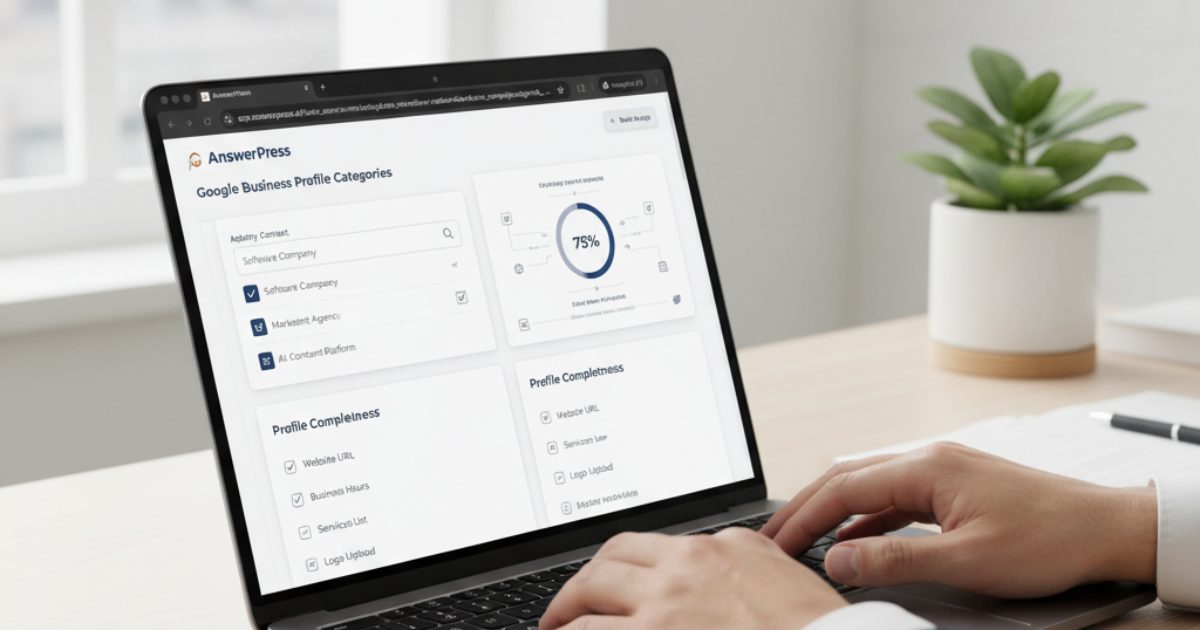
A complete GBP profile underpins every other ranking signal. Google uses your profile data to match your business to relevant queries. Incomplete profiles create ambiguity, and AI systems resolve ambiguity by citing someone else.
Category selection is particularly consequential. Your primary category should reflect the single most specific description of your core business. Secondary categories can expand your relevance footprint, but they should be accurate, not aspirational.
Select the most specific primary category available, not a broad parent category
Add secondary categories only for services you actively provide
Fill every available attribute field, including accessibility, payment methods, and service options
Keep your business description focused on what you do and where you do it, using natural language that mirrors how customers search
Factor 2: NAP Consistency Across the Web
NAP stands for Name, Address, and Phone number. Consistency across your GBP, website, and third-party directories remains a foundational GBP ranking factor. AI systems cross-reference these data points. Inconsistencies signal unreliability.
This is not a new concept, but the stakes are higher now. When an AI answer engine pulls your business details to include in a response, it is drawing from structured data it has already indexed. If your address appears in three different formats across the web, the system may not surface your business at all.
Audit your citations at least quarterly. Pay particular attention to data aggregators, which often hold outdated information that propagates across dozens of directories without your knowledge.
Factor 3: Review Volume, Recency, and Response Rate
Reviews have always influenced local rankings. In 2026, three dimensions of your review profile matter: how many you have, how recent they are, and whether you respond to them.
Recency is the most underweighted of the three. A business with 200 reviews, the most recent of which is eight months old, is at a disadvantage against a competitor with 60 reviews and a steady stream of new ones. AI systems treat fresh reviews as a freshness signal for the profile as a whole.
Response rate matters because it signals active management. A profile where the owner responds consistently to both positive and negative reviews demonstrates engagement, which correlates with prominence in Google’s algorithm.
As Agency Jet’s 2026 GBP optimization guide notes, accurate NAP data combined with active review engagement are among the most important factors in the AI-influenced local ranking environment.
Factor 4: Photo and Video Freshness
Photos are a freshness signal, not just a visual asset. Profiles with recently uploaded, original photos consistently outperform those with a static library of images uploaded years ago. Google can detect image age, and AI systems interpret fresh visual content as evidence of an active, operating business.
What to Upload and How Often
Aim for at least two to four new photos per month. Stock photos and heavily filtered images perform worse than authentic, location-specific visuals. Prioritize these content types:
Interior and exterior shots that reflect current conditions
Team photos that show real people at the actual location
Product or service photos tied to seasonal offerings or recent updates
Short videos (under 30 seconds) showing your space or a service in progress
Geotagging your photos before uploading adds a location layer that reinforces your geographic relevance signals.
Factor 5: GBP Posts and Q&A Engagement
GBP Posts are one of the most underutilized freshness signals available. Publishing a post signals to Google that someone is actively managing the profile. It also gives AI systems additional structured content to index when constructing local answers.
Standard posts expire after seven days, so a posting cadence of at least once per week is necessary to maintain continuous freshness. Offer posts and event posts have longer lifespans and should be used for promotions and scheduled events.
The Q&A section deserves equal attention. Business owners can seed their own Q&A section by posting common customer questions and answering them directly. This gives AI systems well-structured, authoritative answers to pull from when users ask related questions in conversational search.
Factor 6: Structured Data and Schema Markup on Your Website
Your GBP does not operate in isolation. Google cross-references your profile data with what it finds on your website. If your site lacks structured data, you are leaving a significant corroboration signal on the table.
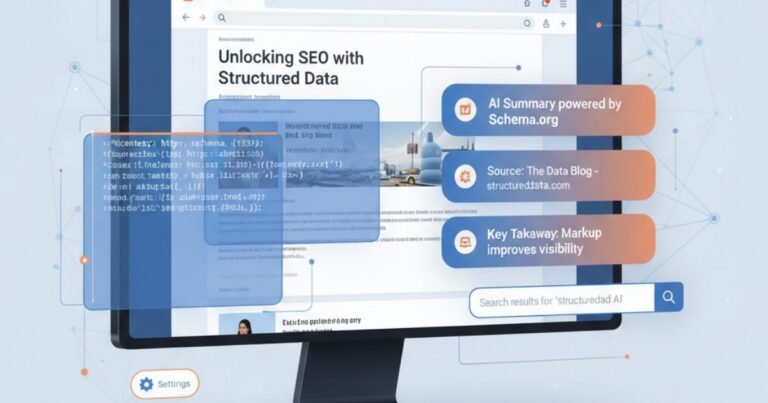
LocalBusiness schema markup on your website confirms your NAP data, business hours, service areas, and categories. This confirmation loop strengthens your prominence signals and makes your data easier for AI systems to parse. For a detailed breakdown of which schema properties carry the most weight, the article on 7 essential local business schema properties for rich results covers the implementation specifics.
Priority Schema Properties for Local Businesses
@type: Use the most specific LocalBusiness subtype available
name, address, telephone: Must match your GBP exactly
openingHoursSpecification: Structured hours are more parseable than plain text
geo: Latitude and longitude coordinates reinforce location signals
hasMap: Link directly to your Google Maps listing
Factor 7: Behavioral Signals and Engagement Metrics
Behavioral signals are the GBP ranking factor that most businesses have the least direct control over, but they are worth understanding. Google tracks how users interact with your profile: clicks to call, direction requests, website clicks, and photo views all feed into your prominence score.
A profile that generates high engagement relative to competitors in the same category and geography will rank higher, regardless of how polished it looks on paper. This is why the other six factors matter so much. A complete profile with fresh photos, active posts, and recent reviews naturally generates more engagement than a neglected one.
The most important insight about GBP ranking factors in 2026: AI systems are not just reading your profile; they are evaluating it as a data source. Profiles that are structured, fresh, and actively managed get cited. Static profiles get ignored, regardless of how long the business has been operating.
Putting the Seven Factors Together
These GBP ranking factors do not operate independently. They reinforce each other. A complete profile with accurate schema markup generates more trust signals. Fresh photos combined with active posting create consistent freshness signals. Review recency combined with response activity demonstrates prominence.
The businesses that will hold strong local positions through 2026 and beyond are those treating GBP management as an ongoing operational task, not a one-time setup project.
For local businesses building a broader AEO strategy around these signals, the guide to local SEO strategies for Google AI Overviews provides a practical framework for connecting GBP optimization to AI answer visibility. And for businesses working on the E-E-A-T signals that underpin long-term local authority, the article on E-E-A-T strategies for local business SEO covers the specific tactics that move the needle.
Conclusion
The seven GBP ranking factors covered here represent the most actionable levers available to local businesses in 2026. Profile completeness, NAP consistency, review management, photo freshness, post and Q&A engagement, structured data alignment, and behavioral signals all feed into a single outcome: whether your business gets cited or gets skipped.
The shift toward AI-generated local answers has raised the bar for what “optimized” means. A profile that was competitive in 2023 may be structurally invisible to the AI systems now handling local queries. The gap between a maintained profile and a neglected one has never been wider.
If your GBP management is still a quarterly task rather than a weekly one, that is the first thing to fix. Start with completeness and schema alignment, then build a sustainable cadence for posts, photos, and review responses. The businesses that treat these GBP ranking factors as operational infrastructure, rather than marketing checkboxes, are the ones that will hold visibility as search continues to shift.
AnswerPress helps WordPress publishers build the content infrastructure that supports AI visibility across local and organic search. If you want to see how a structured content strategy connects to your GBP signals, visit the AnswerPress about page to learn how the platform works.
Frequently Asked Questions
What are the most important Google Business Profile ranking factors for 2026?
For 2026, the most critical Google Business Profile (GBP) ranking factors are profile completeness and category accuracy, NAP consistency, review volume, recency, and response rate, photo and video freshness, GBP posts and Q&A engagement, structured data and schema markup on your website, and behavioral signals. These factors are weighted heavily by AI systems that now interpret local search queries.
How has the importance of GBP ranking factors changed with AI?
AI answer engines now intercept local queries, requiring a different approach to GBP management. While core local ranking principles like relevance, distance, and prominence remain, AI systems interpret these signals by pulling structured, verifiable data from GBP. A profile that appears functional in traditional searches might be invisible to AI if its structure is not easily parsed.
How does NAP consistency impact my local visibility in 2026?
NAP (Name, Address, Phone number) consistency across your GBP, website, and third-party directories is crucial because AI systems cross-reference these data points. Inconsistencies signal unreliability and can prevent your business from being surfaced in AI-generated answers. Auditing your citations quarterly is recommended to catch outdated information.
What role do reviews play in GBP rankings now?
Reviews are critical, with three dimensions mattering: volume, recency, and response rate. Fresh reviews act as a signal of profile activity, and consistently responding to both positive and negative feedback demonstrates active management. AI systems view recent reviews as a freshness indicator for the entire profile.
How can I ensure my GBP profile is visible to AI systems?
To ensure visibility to AI systems, focus on maintaining a dynamic, actively managed profile. This includes filling out all profile attributes, ensuring NAP consistency, regularly uploading fresh photos and videos, publishing weekly GBP posts, seeding your Q&A section with common questions, and implementing LocalBusiness schema markup on your website. These actions create structured, verifiable data that AI can easily parse.