
Running content for multiple clients used to mean one thing: hiring more people. A new brand meant a new writer, a new strategist, possibly a new editor. The math was simple and brutal. Headcount scaled with client count, and margins compressed accordingly.
That equation no longer holds. In 2026, 85 percent of marketing tasks can be automated through AI, delivering an average productivity gain of 32 percent. Agencies that have internalized this are building multi-brand strategy systems, not multi-brand teams. The ones still hiring for every new account are watching their competitors outpace them at a fraction of the cost.
This article explains how a disciplined, AI-powered multi-brand strategy works in practice: what the workflow looks like, where the leverage points are, and how to maintain brand integrity across a diverse client portfolio without adding headcount.
Why the Old Multi-Brand Model Breaks Down
The traditional agency model treated each brand as a silo. Separate writers, separate briefs, separate editorial calendars. This approach worked when content volume was manageable and search rewarded frequency over depth.
Both of those conditions have changed. Google AI Overviews, ChatGPT, and Perplexity now intercept queries before users click through to any website. AI systems cite a small number of structured, authoritative sources per answer. Publishing more mediocre content does not improve your odds of being cited; publishing well-structured, expert content does.
According to research published by Presenc AI in March 2026, AI-assisted content that is well-edited and factually grounded performs 12 percent better in AI search citations than purely human-written content. The implication for agencies is significant: the quality bar has risen while the cost of production has dropped. The average cost of a 2,000-word article fell 44 percent between 2024 and 2026, from $480 to $268.
Agencies that cling to the old model pay more per article and produce content that is less likely to be cited. That is a compounding disadvantage.
The Core Architecture of a Scalable Multi-Brand Strategy
A scalable multi-brand strategy rests on three structural pillars: a unified workflow, brand-specific configuration layers, and Answer Engine Optimization (AEO) as the production standard. Each pillar does distinct work.
Pillar One: A Unified Workflow Across All Brands
The efficiency gains in a multi-brand operation come from standardizing the process, not the output. Every brand gets the same decision chain: topic selection, keyword mapping, brief generation, draft production, SEO and schema, and publishing. What varies is the brand voice, the target audience, and the topical focus.
As the TeamOf8 blog notes in its analysis of agency content workflow automation, the agencies gaining the most capacity are those that have mapped their production steps into repeatable, automatable sequences. When the process is consistent, adding a new brand does not require rebuilding the workflow from scratch.
The practical result: 58 percent of agencies surveyed in 2025 said AI had cut their content creation time, and 42 percent reclaimed between five and ten billable hours per week. Those hours are the margin that makes scaling without hiring possible.
Pillar Two: Brand-Specific Configuration Layers
Standardized process does not mean generic output. Each brand in your portfolio needs a configuration layer that governs how the shared workflow produces brand-appropriate content. This layer typically includes:
- A documented brand voice guide with tone, vocabulary, and prohibited phrasing
- A topical authority map defining the subject areas the brand will own
- A keyword and entity list tied to that brand’s audience and market
- Schema and structured data templates specific to the brand’s content types
Maintaining this configuration layer is the real work of multi-brand management. The Cimarron Winter analysis of multi-brand strategy and cohesive digital experiences makes the point plainly: brand consistency across a portfolio is an operational discipline, not a creative afterthought. Agencies that treat it as an afterthought produce content that erodes client trust.
Pillar Three: AEO as the Production Standard
Search Engine Optimization (SEO) optimized content for ranking on a results page. Answer Engine Optimization (AEO) optimizes content to be cited inside AI-generated answers. These are related but distinct goals, and AEO is now the higher-value target.
AEO-ready content is structured so AI systems can extract clear, factual answers. It uses schema markup, direct question-and-answer formatting, and specific entity signals. Every piece of content your agency produces, across every brand, should meet this standard before it publishes.
In 2026, an estimated 38 percent of all web content published by businesses involves AI assistance at some stage of creation. The agencies producing content that is both AI-assisted and AEO-optimized are capturing the citations their competitors are missing.
Building the Technology Stack
A multi-brand strategy without the right technology stack is just a plan on a whiteboard. The stack needs to handle the full production chain without requiring a human to manually coordinate each step.
Demandbase’s breakdown of how to leverage AI in marketing identifies content production efficiency as one of the clearest ROI drivers for AI adoption. The key is selecting tools that integrate with each other rather than creating new coordination overhead.
For WordPress-based agencies, the stack typically includes:
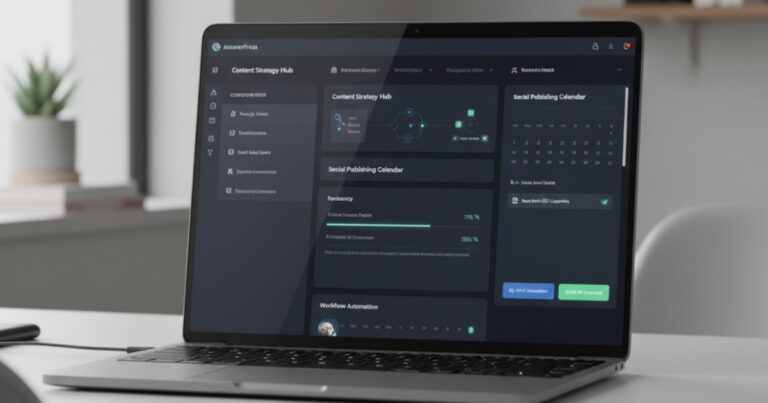
- A strategy engine that handles topic selection, keyword mapping, and brief generation across multiple brand profiles
- An AI-assisted drafting layer that produces structured, AEO-ready content grounded in brand configuration
- An SEO and schema layer, such as Rank Math, that handles metadata, structured data, and technical optimization at publish time
- A workflow orchestration layer that sequences these steps and reduces manual handoffs
Selecting the right workflow orchestration platform for your agency is a decision that compounds over time. A platform that integrates the full chain reduces the cognitive load on your team and allows each strategist to manage a larger brand portfolio.
The Webplant’s guide on scaling an agency profitably without hiring frames this clearly: productizing your service delivery through technology is what separates agencies with healthy margins from those perpetually chasing capacity.
Compliance Is Not Optional in a Multi-Brand Operation
Running AI-assisted content production across multiple brands introduces regulatory exposure that solo operators rarely face. The EU AI Act, effective for general-purpose AI models as of August 2025, requires transparency and labeling for AI-generated content. New York requires conspicuous disclosure when an advertisement uses an AI-generated synthetic performer, effective June 9, 2026.
The Federal Trade Commission has been explicit: there is no AI exemption from consumer protection law. AI-generated marketing content is subject to the same disclosure standards as any other consumer-facing content.
For agencies, this means compliance protocols need to be part of the workflow configuration for each brand, not a separate review process added at the end. Specific steps to build into your production chain include:
- Documenting the AI tools used in each brand’s content production
- Establishing human editorial review as a mandatory step before publishing
- Maintaining disclosure language templates appropriate to each brand’s jurisdiction
- Auditing published content periodically against updated regulatory guidance
Google’s March 2025 core update reduced rankings for 61 percent of sites with over 80 percent unedited AI-generated content. Human editorial review is not just a compliance requirement; it is a ranking signal.
Adopting AI Strategically Across Your Agency
The agencies seeing the largest gains from AI are not the ones that adopted the most tools. They are the ones that adopted AI with a clear operational strategy behind it. There is a meaningful difference between using AI to write faster and using AI to build a system that scales.
A proactive AI adoption strategy for agencies defines which decisions AI handles autonomously, which require human judgment, and how quality is verified at each stage. Without this structure, AI tools create new coordination problems rather than solving existing ones.
The shift also requires rethinking how your team spends its time. Strategists should spend their hours on brand configuration, quality review, and client communication. Production tasks, from topic selection to first draft to schema generation, should run through the automated workflow. This reallocation is what allows one strategist to manage five or six brand portfolios instead of two.
Evaluating the right AI agent platforms for agency operations is a practical starting point. The platforms that support multi-brand configuration, integrate with WordPress natively, and handle the full content decision chain are the ones that create durable operational leverage.
Measuring What Actually Matters
A multi-brand strategy built for AEO requires different success metrics than traditional SEO. Organic click-through rates will not tell you whether your content is being cited in AI answers. You need visibility data that reflects how AI systems are using your content.
Key metrics to track across your brand portfolio include:
- AI citation frequency: how often each brand’s content appears in AI-generated answers
- Topical coverage depth: whether each brand’s content cluster covers its subject area completely enough to signal authority
- Schema implementation rate: what percentage of published content includes appropriate structured data
- Human editorial review completion: whether every AI-assisted piece received substantive human editing before publishing
These metrics connect directly to the outcomes clients care about: being recommended by AI systems, ranking for competitive queries, and building durable topical authority in their category.
Conclusion
A disciplined multi-brand strategy in 2026 is an operational system, not a headcount decision. The agencies that have internalized this are running larger client portfolios with the same team size, producing content that meets the AEO standard, and building topical authority that compounds over time.
The components are clear: a unified, automatable workflow; brand-specific configuration layers that preserve each client’s voice and focus; an AEO-first production standard; a technology stack that integrates the full decision chain; and compliance protocols built into the process rather than bolted on at the end.
The market data supports the investment. Content marketing budgets have risen to 26 percent of total marketing spend in 2026. The generative AI content creation market is projected at $26.0 billion this year. Agencies that build the right system now will be positioned to capture that demand without the margin-destroying overhead of proportional hiring.
If you are ready to build this kind of system for your agency, AnswerPress handles the full content decision chain natively in WordPress, from strategy to schema to publish, across as many brand profiles as your portfolio requires. Contact us to see how it works in practice.
Frequently Asked Questions
How does a multi-brand strategy differ from the traditional agency model?
The traditional model scaled by hiring more staff for each new client, which compressed profit margins. A modern multi-brand strategy focuses on building AI-powered systems and a unified workflow to manage multiple clients efficiently without proportional headcount increases.
What is Answer Engine Optimization (AEO) and why is it important?
AEO optimizes content to be cited within AI-generated answers, a shift from traditional SEO which focused on ranking on search results pages. Content optimized for AEO uses specific structures like schema markup and direct question-and-answer formats, making it easier for AI systems to extract clear, factual information.
How can I maintain brand integrity across multiple clients with a unified workflow?
Brand integrity is maintained through brand-specific configuration layers within a unified workflow. These layers include documented brand voice guides, topical authority maps, keyword lists tailored to each brand's audience, and specific schema templates, ensuring consistent yet distinct output for each client.
What are the key technology components for a scalable multi-brand strategy?
A scalable multi-brand strategy requires a technology stack that integrates the full content production chain. This typically includes a strategy engine for topic selection and briefs, an AI-assisted drafting layer, an SEO and schema layer, and a workflow orchestration platform to sequence these steps and reduce manual handoffs.
What are the compliance considerations for AI-assisted content across multiple brands?
Compliance is crucial due to regulations like the EU AI Act and FTC guidelines, which require transparency and disclosure for AI-generated content. Agencies must integrate compliance protocols into their workflow, including documenting AI tools used, ensuring human editorial review, maintaining appropriate disclosure language, and auditing published content.