
Agencies in 2026 are not short on AI tools. They are short on coherence. The average mid-size agency now runs four to seven separate AI applications across research, writing, project management, client reporting, and delivery, and almost none of those tools share context with each other. The result is a fragmented operation where humans spend significant time acting as connective tissue between systems that should be talking to each other automatically.
A workflow orchestration platform solves this problem by coordinating multiple AI agents, data sources, and automated processes under a single decision layer. Choosing the right one for your agency is a consequential decision, and the options in 2026 look substantially different from what existed even 18 months ago.
What a Workflow Orchestration Platform Actually Does
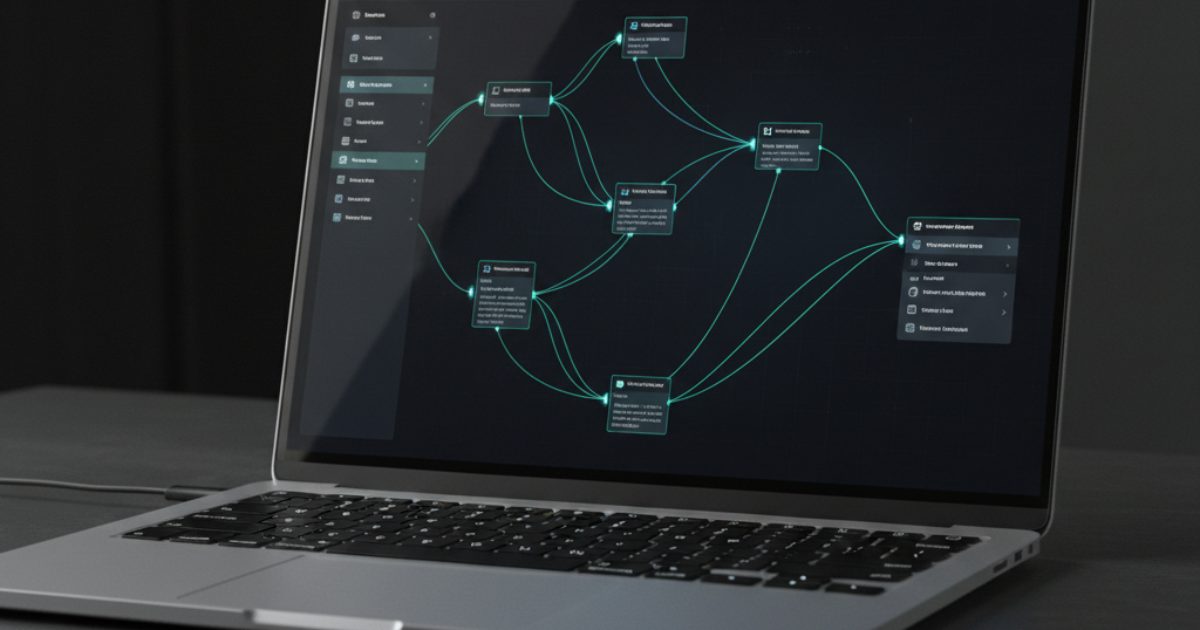
The term gets used loosely, so it is worth being precise. A workflow orchestration platform manages the sequencing, dependencies, and handoffs between automated tasks. In an AI-powered version, that coordination layer also includes large language models, AI agents, and dynamic decision logic that can adapt based on intermediate outputs.
This is distinct from a simple automation tool like a linear Zap or a webhook chain. Orchestration implies that the system can handle branching logic, parallel execution, error recovery, and multi-agent collaboration without a human manually directing each step.
The core value of orchestration: According to Blue Prism’s analysis of AI workflow orchestration benefits, organizations that implement proper AI orchestration reduce manual process overhead significantly while improving the consistency of outputs across high-volume tasks. For agencies billing on outcomes rather than hours, that consistency directly protects margin.
For agencies specifically, orchestration becomes critical when client volume scales past what a linear, human-supervised process can handle. At that point, either you build a system that coordinates itself, or you hire more coordinators. The math on the latter gets painful quickly.
The Four Categories of Platform You Will Encounter
The market in 2026 will be sorted into four recognizable categories, each with different trade-offs for agency use.
Enterprise Multi-Agent Orchestration Systems
These platforms are built for large organizations running complex, high-stakes workflows across departments. They typically offer robust governance, audit trails, role-based access controls, and integrations with enterprise data infrastructure. Vendors in this category include established automation players who have added AI agent layers to their existing process automation products.
The challenge for most agencies is that enterprise platforms are priced and scoped for enterprise problems. Implementation timelines measured in quarters, dedicated IT requirements, and six-figure annual contracts make them impractical for agencies with fewer than 50 staff. Research on enterprise AI orchestration and multi-agent systems confirms that the scalability benefits are real, but the operational prerequisites are significant.
Mid-Market Orchestration Platforms
This is where most growing agencies will find their best fit. Platforms in this tier offer multi-agent coordination, API connectivity, and visual workflow builders without requiring a dedicated implementation team. Several have introduced AI-native features in 2025 and 2026, including dynamic task routing, LLM-powered decision nodes, and agent memory that persists context across workflow runs.
The trade-off here is depth versus accessibility. Mid-market platforms handle most agency use cases well, but they may hit ceilings when workflows require deeply custom logic or proprietary data integrations.
Vertical-Specific Platforms
A growing number of orchestration tools are built for specific agency types: content agencies, performance marketing shops, PR firms, or creative studios. These platforms sacrifice breadth for depth, offering pre-built workflow templates, industry-specific integrations, and output formats tuned to the work those agencies actually produce.
For agencies with a narrow, well-defined service offering, a vertical platform can compress implementation time considerably. The risk is vendor lock-in and limited flexibility when client needs evolve.
AI Content Strategy Engines
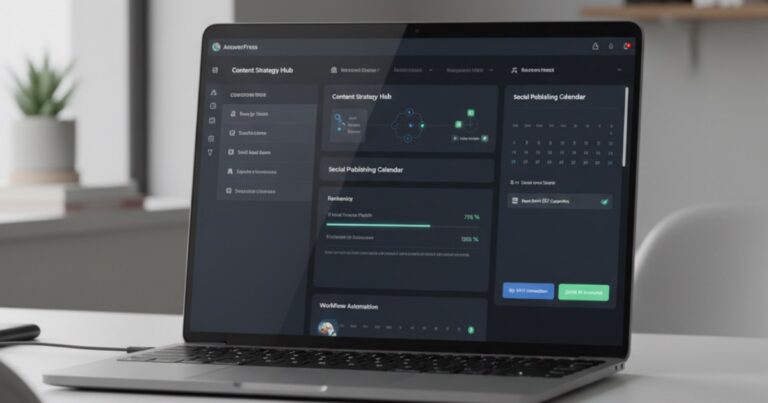
A distinct and increasingly relevant category for content-focused agencies is the AI content strategy engine. These platforms orchestrate the full content production decision chain, from topic selection and keyword strategy through drafting, SEO optimization, and publishing, rather than treating each step as a separate tool to be connected manually.
This matters because content agencies often underestimate how much coordination overhead exists between the strategic and production layers of their work. A platform that owns that entire chain removes a class of handoff errors that plague multi-tool stacks.
Evaluation Criteria That Actually Matter for Agencies
When assessing any workflow orchestration platform, agencies should apply a consistent framework rather than react to feature lists. The following criteria separate platforms that work in production from those that demo well and disappoint in practice.
Agent coordination capability: Can the platform run multiple AI agents in parallel, pass context between them, and handle failures gracefully without manual intervention?
Integration depth: Does it connect natively to the tools your agency already uses, or does it require custom API work for every connection?
Auditability: Can you trace any output back through the workflow steps that produced it? This matters for client accountability and quality control.
Latency at scale: How does performance hold up when 50 workflows are running simultaneously rather than one?
Pricing structure: Is the platform priced per seat, per workflow run, or per output? Seat-based pricing often becomes punitive as agencies scale delivery teams.
Time to first value: How long before a new agency client or use case is live in production? Platforms requiring months of configuration are a liability in a fast-moving market.
How the AEO Shift Changes the Orchestration Requirement
Agencies serving clients in organic search and content marketing face a compounding challenge. The underlying output standard has risen sharply as AI answer engines have become the primary interface for search queries. Producing content that gets cited in Google AI Overviews or referenced by ChatGPT requires structured, authoritative, well-organized material, not just keyword-optimized text.
This changes what an orchestration platform needs to coordinate. The workflow is no longer “research, write, publish.” It is “identify topical authority gaps, select the right question-and-answer structure, generate schema-ready content, validate against E-E-A-T signals, and publish with proper metadata.” Each of those steps has dependencies on the previous one, and errors compound downstream.
Understanding how content strategy must adapt to new AI search platforms is a prerequisite for specifying what your orchestration layer needs to handle. Agencies that treat content production as a linear assembly line will find that even a well-configured orchestration platform cannot compensate for a flawed strategic model.
For a deeper look at how the underlying economics of agency operations are shifting alongside these technical changes, the analysis on optimizing average revenue per user in the AI economy is directly relevant to how you price and scope orchestrated workflows for clients.
Common Implementation Mistakes Agencies Make
Selecting the right workflow orchestration platform is only half the problem. The implementation decisions that follow determine whether the investment pays off or becomes another underused subscription.
Automating Broken Processes
Orchestration amplifies whatever process it runs. A flawed briefing process, automated at scale, produces flawed briefs faster. Before configuring any workflow, document the current process in detail, identify where quality failures actually occur, and fix those failures before encoding them into automation logic.
Under-Specifying Agent Handoffs
Multi-agent workflows fail most often at the handoff points. When Agent A passes output to Agent B, the context transfer needs to be explicit and complete. Vague handoffs produce outputs where the downstream agent lacks the information it needs and either hallucinates or produces generic results.
Skipping the Human Review Layer
Full automation is rarely appropriate for client-facing deliverables in 2026. The better model is high-automation with strategic human checkpoints, where a human reviews outputs at defined quality gates rather than supervising every step. Platforms that make it easy to insert approval nodes into workflows are meaningfully more useful than those that treat human review as an afterthought.
Ignoring Workflow Observability
If you cannot see what your orchestration system is doing in real time, you cannot improve it. Platforms with strong logging, error alerting, and performance dashboards allow agencies to identify bottlenecks and failure patterns before clients notice them.
Matching Platform Type to Agency Size and Model
The right workflow orchestration platform depends heavily on where your agency sits in terms of scale, specialization, and service model.
Solo operators and boutique agencies (1-10 people): Vertical-specific or mid-market platforms with pre-built templates. Minimize configuration overhead. Prioritize time to first value.
Growing agencies (10-50 people): Mid-market platforms with strong API connectivity and multi-agent support. Look for seat-agnostic pricing and robust integration libraries.
Established agencies (50+ people): Mid-market or enterprise platforms, depending on client data sensitivity and compliance requirements. Invest in implementation properly; shortcuts here cost more later.
Content-focused agencies of any size: Evaluate AI content strategy engines as a primary layer, with a general orchestration platform handling adjacent operational workflows.
For a broader view of how agencies are evaluating AI agent platforms across operational functions, the comparison of AI agent platforms for agency operations in 2026 covers the competitive landscape in detail.
What to Expect From the Platform Market Through the Rest of 2026
The workflow orchestration platform market is consolidating. Several mid-market vendors that raised aggressively in 2024 and 2025 are struggling to differentiate on features alone, and acquisition activity has accelerated in the first half of 2026. For agencies, this creates two practical considerations.
First, vendor stability matters more than it did 18 months ago. A platform that gets acquired mid-contract may pivot its roadmap, change its pricing model, or deprecate integrations that your workflows depend on. Evaluate the financial health and strategic positioning of any vendor you commit to at the agency level.
Second, the platforms that are gaining ground are those with strong native publishing integrations and structured output capabilities. General-purpose orchestration tools are losing ground to platforms that understand the specific output formats required for AI-cited content, schema-compliant publishing, and structured answers.
Conclusion
Choosing a workflow orchestration platform is not a software decision. It is an operating model decision. The platform you select will shape how your agency delivers work, how you price that work, and how efficiently you can scale without proportional headcount growth.
The agencies that will perform well through the remainder of 2026 are those that have moved past the “which tool” question and into the “how does this system run” question. That means mapping your actual workflows before evaluating vendors, applying consistent criteria rather than reacting to demos, and treating implementation as a strategic project rather than an IT task.
If your agency produces content as a core service, the orchestration requirement extends into the strategic layer of content production, not just the operational layer. Platforms that coordinate research, structure, drafting, SEO metadata, and publishing as a unified process are solving a materially different problem than general-purpose automation tools.
AnswerPress is built specifically for that content strategy orchestration layer, integrating natively with WordPress and Rank Math to take a campaign from topic selection to published, schema-ready article without the fragmented tool stack. If that workflow gap is the one costing your agency the most time, it is worth a close look at what AnswerPress does and whether it fits your production model.
What is a workflow orchestration platform?
A workflow orchestration platform coordinates multiple AI agents, data sources, and automated processes under a single decision layer. It manages the sequencing, dependencies, and handoffs between automated tasks, including dynamic decision logic that adapts based on intermediate outputs.
How does workflow orchestration differ from simple automation?
Orchestration implies a system that can handle branching logic, parallel execution, error recovery, and multi-agent collaboration without human intervention at each step. Simple automation tools typically follow linear chains or basic webhooks.
What are the trade-offs between mid-market and enterprise orchestration platforms?
Mid-market platforms offer multi-agent coordination and visual builders without dedicated IT, making them accessible for growing agencies. Enterprise platforms provide robust governance and integrations for large organizations but come with higher costs and longer implementation times, often making them impractical for smaller agencies.
What is the main risk with vertical-specific orchestration platforms?
The primary risk with vertical-specific platforms is vendor lock-in and limited flexibility if client needs evolve beyond the platform's niche. While they can compress implementation time for specific agency types, they may not adapt well to changing service offerings.
How does AI-powered content strategy differ from general orchestration?
AI content strategy engines orchestrate the entire content production decision chain, from topic selection and drafting to SEO optimization and publishing. This is distinct from general orchestration platforms that manage operational workflows but may not inherently understand the strategic layers of content creation.