
Google algorithm updates have always demanded attention. But the 2026 wave is different in kind, not just degree. The introduction of AI Overviews into mainstream search has fractured the old model where ranking on page one meant winning traffic. Now, a significant share of queries get answered inside the search results page itself, and the sources Google cites in those answers are a very short list. If your WordPress site is not on that list, the update cycle has already moved past you.
This article breaks down what changed, why it matters for WordPress publishers specifically, and what a practical AEO workflow looks like in response.
How Recent Google Algorithm Updates Reshaped the Search Results Page
The March 2026 core update was the clearest signal yet that Google’s ranking logic has been restructured around AI-generated answers. Our detailed breakdown of how Google’s March 2026 update impacts your SEO structured data covers the technical specifics, but the strategic implication is straightforward: structured, authoritative content now earns citations inside AI Overviews, not just positions in the blue-link list below them.
On May 15, 2026, Google published its official generative AI search guide, consolidating guidance that had previously been scattered across blog posts and developer documentation. Semrush’s analysis of that guide confirms that Google is not abandoning core SEO principles. Helpfulness, E-E-A-T, and technical quality remain the foundation. What changed is the output format: satisfying those principles now earns a citation in an AI-generated answer, not just a rank.
The practical result is a two-tier visibility model. Tier one is the AI Overview, which appears above organic results and intercepts a growing share of informational queries. Tier two is everything below it. Most content teams are still optimizing for tier two only.
The Zero-Click Problem Is Not a Temporary Condition
Zero-click searches are not a glitch in the system. They are the intended behavior of AI Overviews. According to EnFuse Solutions’ February 2026 analysis of how AI Overviews are changing SEO, the rise of AI-generated answers is directly correlated with declining organic click-through rates across informational query categories.
For WordPress publishers who built traffic models around informational content, this is a structural problem. A blog post that ranks third for a high-volume question keyword may now sit below an AI Overview that fully answers the question without requiring a click. The traffic that post used to generate has been intercepted upstream.
The critical shift: Organic rankings still matter, but citation inside an AI Overview now delivers the brand exposure that a page-one ranking used to provide. Optimizing only for rankings, while ignoring citation eligibility, leaves the most visible real estate on the page unclaimed.
This does not mean abandoning SEO. It means adding an AEO layer on top of it.
What Answer Engine Optimization Actually Requires
AEO is not a separate discipline with its own alien logic. It is an extension of what good SEO has always demanded, executed with more precision and with AI parsing behavior in mind.
Content Structure That AI Systems Can Parse
AI answer engines do not read content the way a human does. They extract discrete answers to discrete questions. Content that buries its core point in flowing prose is harder to cite than content that surfaces answers in predictable, structured locations.
Practical structural requirements include:
- Direct answers in the first one to two sentences after a subheading, before any qualifications or context
- Question-formatted H2 and H3 headings that mirror how users phrase queries
- Short paragraphs with one idea each, rather than dense multi-point blocks
- Definition-style openings for conceptual sections (“X is Y” constructions work well here)
Our guide on the critical role of content structure in achieving AEO goals goes deeper on the formatting logic behind citation eligibility.
Schema Markup Is No Longer Optional
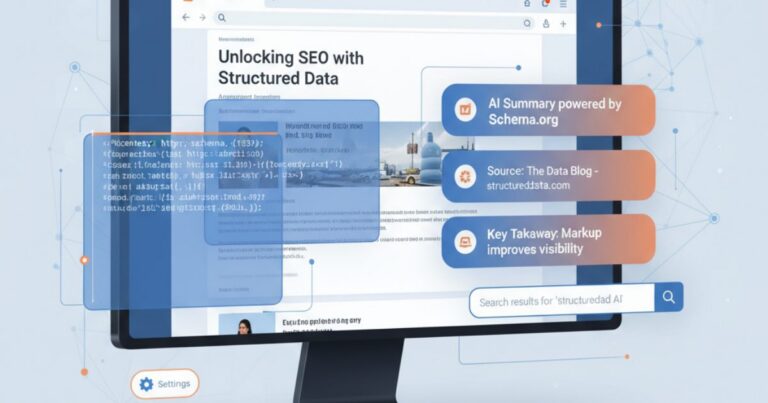
Structured data has been a best practice for years. In the context of AI Overviews, it is closer to a prerequisite. Schema markup gives Google machine-readable confirmation of what your content asserts, who authored it, and what entity it is about. That confirmation is part of what earns citation trust.
For WordPress publishers using Rank Math, the implementation barrier is low. The plugin handles most schema types through its interface. The strategic work is choosing the right schema types for each content category and keeping those definitions current as Google’s schema preferences evolve.
E-E-A-T Signals at the Page Level
Google’s helpful content system evaluates E-E-A-T (Experience, Expertise, Authoritativeness, Trustworthiness) at the page level, not just the domain level. A high-authority domain publishing thin content on a topic still produces thin content. Each article needs to demonstrate direct experience or expertise within its own text.
Concrete ways to build page-level E-E-A-T include:
- Named authors with credentials relevant to the topic
- Specific data points, dates, and source citations rather than vague claims
- Original observations or analysis that cannot be scraped from other sources
- Clear publication and last-updated dates visible to both users and crawlers
Topical Authority Has Become the Threshold Requirement
Google algorithm updates over the past 18 months have consistently rewarded sites that demonstrate deep, consistent coverage of a subject area over sites that publish broadly across unrelated topics. This is the topical authority signal, and it has become more consequential as AI systems evaluate which sources to trust for citation.
A site that has published 40 articles on a single subject cluster, with clear semantic relationships between them, signals to Google’s systems that it is a reliable source on that subject. A site that has published 40 articles across 20 unrelated topics signals nothing in particular.
For small WordPress publishers, this is actually an advantage. A narrow focus is achievable without a large team. The constraint is discipline, not resources. Our analysis of what the latest algorithm updates mean for your SEO topical authority explains how to map a topic cluster that satisfies Google’s current depth requirements.
Evergreen Content Needs a New Definition
The traditional definition of evergreen content was “content that stays relevant over time without updates.” That definition no longer holds in a world where Google’s algorithm updates happen continuously and AI Overviews pull from the most current, accurate sources available.
Evergreen content in 2026 means content that is structured for long-term relevance and maintained with regular accuracy reviews. A 2024 article with outdated statistics and no revision date is not evergreen. It is a liability. Google’s systems can now detect content freshness signals at a granular level, and stale data is a citation disqualifier.
The practical workflow is to treat your highest-traffic informational articles as living documents. Schedule quarterly accuracy reviews, update statistics when sources publish new data, and revise the publication date when substantive changes are made. Our coverage of how Google’s latest updates reshape your evergreen content strategy in 2026 outlines a maintenance cadence that keeps content citation-eligible over time.
A Practical AEO Workflow for WordPress Publishers
Translating these principles into a repeatable workflow is where most content teams stall. The concepts are clear; the execution is fragmented across tools that do not communicate with each other.
A functional AEO workflow for a WordPress site covers these sequential steps:
- Topic and cluster planning: Identify a subject area narrow enough to build real depth, then map the full set of questions a user might ask within it.
- Keyword and intent alignment: For each topic, identify the specific query format (definition, comparison, how-to, list) that matches the search intent. Structure the article to match that format.
- Content brief with AEO requirements: Build a brief that specifies the required schema type, the direct-answer placement for the opening section, the E-E-A-T signals to include, and the internal linking targets within the cluster.
- Draft and structure review: Verify that every H2 and H3 contains a direct answer in the first sentence, that the schema markup is implemented correctly in Rank Math, and that the author byline includes relevant credentials.
- Publish and index: Submit the URL to Google Search Console immediately after publishing. Monitor AI Overview appearances using a citation tracking tool.
- Maintenance schedule: Flag the article for review at 90 days. Update any statistics, check that linked sources are still live, and revise the last-updated date.
This workflow is not dramatically more complex than a standard SEO content process. The additions are the AEO-specific brief requirements and the citation monitoring step. Both are manageable without a dedicated SEO strategist if the process is documented and followed consistently.
What to Stop Doing After These Updates
Adapting to Google algorithm updates in 2026 is partly about adding new practices and partly about stopping old ones that now actively work against citation eligibility.
Practices to retire:
- Publishing thin content on loosely related topics to capture keyword volume
- Treating schema markup as optional or delegating it entirely to plugin defaults without review
- Measuring content performance exclusively by organic traffic and rank position, without tracking AI Overview citation appearances
- Leaving articles unreviewed for more than six months, particularly those covering statistics or policy-adjacent topics
- Using generic AI-generated text without expert review or original analysis layered in
Each of these practices was tolerable under the pre-2025 algorithm. Under the current system, they reduce citation eligibility and suppress the topical authority signals that determine which sources Google’s AI draws from.
Conclusion
Google algorithm updates in 2026 have not made SEO irrelevant. They have raised the floor. Technical quality, content structure, E-E-A-T, and topical depth were always important. Now they are the minimum requirement for visibility in the tier of search results that actually intercepts user attention.
AEO is the practice of meeting that higher floor deliberately, with a workflow designed around how AI systems evaluate and cite content. For WordPress publishers who implement it systematically, the shift creates a real competitive advantage over sites that are still optimizing for a results page that most users never scroll down to read.
If your current content workflow does not include AEO-specific steps, the time to build them in is before the next major update cycle, not after. Start with your highest-traffic informational content, audit it against the structural and E-E-A-T requirements above, and treat citation eligibility as the primary performance metric going forward. The tools exist in your WordPress stack already. The missing piece is the strategy that connects them.
Frequently Asked Questions
How have recent Google algorithm updates changed search results for WordPress sites?
Recent Google algorithm updates, particularly the introduction of AI Overviews, have restructured search results by prioritizing AI-generated answers above traditional organic links. This means that for many informational queries, users get their answers directly within the search page, potentially bypassing your website entirely if it's not cited.
What is Answer Engine Optimization (AEO) and how does it differ from traditional SEO?
Answer Engine Optimization (AEO) is an extension of traditional SEO that focuses on making content eligible for citation within AI Overviews. While SEO aims for ranking in organic results, AEO specifically targets getting your content recognized and cited by AI systems, which now intercepts a significant portion of search traffic.
Will AI Overviews reduce traffic to my WordPress site, and what can I do about it?
Yes, AI Overviews can reduce traffic by answering queries directly on the search results page, a phenomenon known as zero-click searches. To combat this, you need to implement AEO by structuring your content for AI parsing, using schema markup, and demonstrating strong E-E-A-T signals to increase your chances of being cited.
How does content structure impact my chances of being cited in AI Overviews?
AI systems extract discrete answers, so content structure is critical for citation eligibility. You should aim for direct answers in the first one to two sentences after a subheading, use question-formatted headings, keep paragraphs short and focused on a single idea, and use definition-style openings for conceptual sections.
What are the key E-E-A-T signals I need to demonstrate at the page level for AEO?
To demonstrate E-E-A-T at the page level, you should include named authors with relevant credentials, cite specific data points and sources, provide original observations or analysis, and ensure clear publication and last-updated dates are visible. These signals help Google's systems trust your content as a reliable source for AI Overviews.